
FREE CONSULTATIONS 630-352-2240
Naperville | Oak Brook | Burr Ridge | Lake Forest | St. Charles

-

- Home
- Firm Overview
- Attorneys
- Practice Areas
- Divorce Planning
- Divorce / Dissolution
- Alimony / Maintenance
- Child Support
- Child Custody / Parental Responsibilities
- Child Visitation / Parenting Time
- Special Needs Children & Divorce
- Contested Divorce & Uncontested Divorce
- Complex Divorce
- High Net Worth Divorce
- Divorce Involving Mental Health or Addiction Issues
- Property Valuation & Distribution
- Dissipation of Assets
- Inheritance Matters in Divorce
- Businesses & Divorce
- Post Decree Modifications
- Enforcing the Divorce Decree / Contempt Proceedings (Pre & Post Decree)
- Custodial Parent Removal / Relocation
- Family Law
- Mediation & Collaborative Law
- Blog
- Articles
- News
- Contact
Recent Blog Posts
What Is a Joint Simplified Dissolution in Illinois?
 When a couple in Illinois has been married for a short time and wants to legally end their relationship, they may be able to pursue something known as a “joint simplified dissolution.” Joint simplified dissolutions are different from a declaration of invalidity of a marriage, which makes a marriage as if it never happened. Instead, a joint simplified dissolution is a divorce that allows couples with no children and no significant assets to end their relationship in an expedited process. If you want to learn more about whether you may qualify for a joint simplified divorce in Illinois, read on.
Joint Simplified Dissolution Definition and Requirements
A joint simplified dissolution is essentially a fast-track divorce process for simple divorces in Illinois. A joint simplified divorce takes fewer forms, usually costs far less money, and moves much faster than a traditional divorce. Most joint simplified divorces can be completed after only one court appearance.
Three Reasons to Choose Legal Separation Instead of Divorce in Illinois
 Most residents of Illinois know what divorce is, but fewer people understand the concept of a legal separation. While many people think of legal separation as simply a temporary period during which a couple can do a kind of trial run for divorce, legal separation is actually much more complicated. If you want to learn more about legal separation in Illinois and whether it may be right for you, read on.
What Does it Mean to Be Legally Separated?
Legal separation is when spouses choose to separate their lives, physically, financially, and, usually, emotionally. But rather than a temporary breakup, a legal separation is approved by an Illinois court and deals with many of the same issues as divorce. Parents of children under 18 who seek a legal separation must create a parenting agreement and deal with child support. Couples must also divide marital assets and debt, and one spouse may need to pay spousal maintenance or alimony.
Your Spouse’s Gambling Debt Can Affect Your Illinois Divorce
 Like most behaviors, gambling is usually done in moderation. Most Hoosiers who enjoy Illinois casinos only do so from time to time and do not allow this pastime to interfere with their marital finances. Unfortunately, for some people gambling is a compulsive behavior that can drain a couple’s finances and put them at risk of losing their retirement and home, and even bankruptcy.
Spouses with a gambling addiction will often try to hide their problem and resort to taking out loans without their spouse’s permission. Credit card debt, home equity loans, and more can be used to secure funds for gambling. If you are divorcing a spouse who has a gambling problem and he or she has racked up substantial debt in the process, you are probably wondering what will happen during the marital debt division process.
Equitable Division
Many states are community property states, meaning all assets and debt are divided 50/50 in a divorce. Illinois, however, is an equitable division state. This means that assets and debt are allocated fairly, rather than equally. If one spouse has a problem with gambling and has incurred significant debt, judges will try to ensure that the spouse who spent the money ends up with the responsibility of repaying the debt.
Can My Spouse Get in Legal Trouble For Trying to Hide Assets?
 Conflict is a natural part of divorce for more couples. Even with the best intentions, it can be very difficult to reach a compromise on important issues like asset and debt division because the consequences can be serious and long-lasting. Illinois requires marital assets to be divided fairly, rather than equally, and “fair” can feel different to each spouse.
Sometimes, frustration at the marital asset division process will lead one spouse to try to hide assets in an effort to put themselves in a better position after the divorce. This is a serious mistake that usually backfires, leaving the spouse who hid assets in a much worse situation than they would have been if they had just followed the law from the beginning. Here are three serious consequences for hiding assets in an Illinois divorce.
Do Wealthy Parents Pay More Child Support in Illinois?
 Divorcing spouses must agree to a compromise on many complex problems before a divorce can be finalized. This is especially true when spouses are parents of children under 18. Parenting time, allocation of parental responsibilities, and child support are some of the most contentious issues and it can be difficult to know what to expect.
Child support is often the most predictable part of divorce, but for parents involved in a high net worth divorce, this is often not the case. Although Illinois generally sets child support amounts according to a standard formula, wealthy parents may see a deviation in child support payments. If you are involved in a high-asset divorce and are concerned that your or your spouse’s income may make child support difficult to determine, read on.
Six Factors Courts Consider for Awarding Back Child Support in Illinois
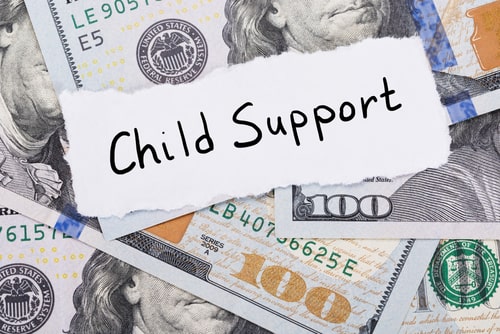 If you are a parent who is divorced or never married, you know how impossible it can feel to afford a decent standard of living for yourself and your child without any financial support from your child’s other parent. The rising cost of living and inflation in Illinois can make paying for food, shelter, clothing, and educational costs very difficult.
Child support orders are an important legal tool for getting the financial help you need. However, it can take some time between when a parent asks for child support and when a child support order is put in place. When this happens, Illinois courts can award child support retroactively to cover the period between when the child support request was filed and when child support payments began.
Establishing Paternity and Child Support
Establishing paternity is especially important for parents who have never been married because Illinois cannot order a man to pay child support if he is not the child’s legal father. Mothers who need child support may want to involve the Illinois Department of Healthcare and Family Services to get help establishing paternity. Paternity can also be established through a court order.
Three Issues That Could Void Your Illinois Prenup
 Anyone who has written a prenuptial agreement before getting married knows that negotiations can be tough. Both partners want good things for each other, but they must also look out for their own best interests in the future. Sometimes, negotiating a prenup can be so challenging that couples may feel as if they are negotiating a divorce before the marriage even starts.
Because prenuptial agreements take hard work and compromise, it is extremely important to make sure that they are legally enforceable if a couple does get divorced. Unfortunately, many couples spend time painstakingly writing a prenup only to get a nasty surprise during divorce proceedings: The prenup is unenforceable and gets thrown out by a judge. If you are considering writing a prenup with your spouse, here are three big mistakes to avoid.
Coercion or Duress
Each partner must agree to the contents of the prenuptial agreement and sign of their own free will. If a fiance coerces, blackmails, or threatens their partner to secure a signature, the prenup could be considered invalid. If one partner presents the other partner with a prenuptial agreement shortly before the wedding and makes the wedding contingent on their fiance signing the prenup, that could be considered coercion. Couples can avoid this by creating a prenup together, having it reviewed by their own attorneys, and signing the prenup well before the wedding.
Three Strategies for Recovering Unpaid Child Support in DuPage County
 Many things keep parents of young children awake at night, but few worries are more stressful than the fear of being unable to financially provide. Unfortunately, many parents are worried about money because their child’s other parent refuses to make court-ordered child support payments. If you are in this situation, you know how frustrating it can be; fortunately, there are strategies that can help you recover unpaid child support and get future payments back on track.
Make Sure Your Child Support Order is Enforceable
Many parents who have never been married set up an unofficial arrangement for child support payments. Although this may seem easier than going to court, it actually can result in more complex challenges later on if a parent decides to stop paying. Before you can take measures to get unpaid child support, you have to have a legally enforceable court order. This involves establishing paternity if you have not already done so, and then going to an Illinois family court to petition for child support based on state guidelines.
How Can My Online Activity Influence My Divorce Case?
 Studies show that Americans spend a great deal of time on the internet. Whether working remotely, streaming videos, or using social media to keep up with friends and family, we are constantly online. If you are like many people considering divorce, you may wonder if your online activity can impact your divorce. Perhaps you have posted some things online that you are not proud of or shared information about the divorce on your Facebook or Instagram account. If you are already separated, you may even use online dating applications like Tinder.
What you do and say online can be used as evidence in a divorce case. Even posts that were deleted or set to “private” may be used against you in a divorce. If you are getting divorced and you have questions or concerns about how your online activity may impact the case, make sure to reach out to an experienced divorce lawyer for help.
Can Courts Use Online Content to Decide Divorce Issues?
Obstacles You May Encounter During the Property Division Process
 Dividing a divorcing couple’s property, money, and debt is an important part of the divorce process. It is also one of the most complex aspects to many divorce cases. If you are getting divorced, you will need to identify each of your assets as either non-marital assets or marital assets. Both spouses have a right to a share of marital property whereas non-marital property belongs only to one spouse. Identifying, valuing, and dividing assets in a divorce can be further complicated by factors such as:
Non-Disclosure of Assets and Debts
Before a married couple can divide their assets and debts during divorce, they must take a full inventory of those assets and debts. Each spouse is asked to provide a financial affidavit listing their property, liabilities, income, and expenses. This financial disclosure may include bank account balances, real estate, stocks, investments, retirement accounts, loans, mortgages, and much more. Financial data from the affidavit influences everything from property division to child support, so accuracy is crucial.









Naperville
50 S. Main Street, Suite 200, Naperville, Illinois 60540
 630-352-2240
Oak Brook
700 Commerce, Suite 500, Oak Brook, Illinois 60523
630-230-8985
Burr Ridge
1333 Burr Ridge Pkwy, Suite 200, Burr Ridge, IL 60527
630-230-1002
Lake Forest
By Appointment Only
847-457-0599
St. Charles
By Appointment Only
331-210-0063
Pay with Zelle
Send to phone number below
312-735-1975
x


Contact Our Firm
 The use of the Internet or this form for communication with the firm or any individual member of the firm does not establish an attorney-client relationship. Confidential or time-sensitive information should not be sent through this form.
I have read and understand the Disclaimer and Privacy Policy.