
FREE CONSULTATIONS 630-352-2240
Naperville | Oak Brook | Burr Ridge | Lake Forest | St. Charles

-

- Home
- Firm Overview
- Attorneys
- Practice Areas
- Divorce Planning
- Divorce / Dissolution
- Alimony / Maintenance
- Child Support
- Child Custody / Parental Responsibilities
- Child Visitation / Parenting Time
- Special Needs Children & Divorce
- Contested Divorce & Uncontested Divorce
- Complex Divorce
- High Net Worth Divorce
- Divorce Involving Mental Health or Addiction Issues
- Property Valuation & Distribution
- Dissipation of Assets
- Inheritance Matters in Divorce
- Businesses & Divorce
- Post Decree Modifications
- Enforcing the Divorce Decree / Contempt Proceedings (Pre & Post Decree)
- Custodial Parent Removal / Relocation
- Family Law
- Mediation & Collaborative Law
- Blog
- Articles
- News
- Contact
Recent Blog Posts
Modifying an Illinois Parenting Plan
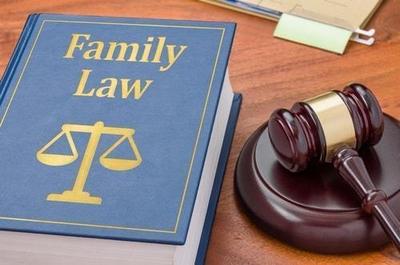 When a married couple with children divorces, they must negotiate and come to an agreement about child custody and parenting time. This negotiation can happen outside of a courtroom during mediation or through private conversation between the couples. If the couples cannot agree upon a parenting plan, they may need to argue their individual cases in court with the help of family law attorneys. If the parents or other parties in a custody dispute resolve the issues related to parental responsibilities (child custody) and parenting time (visitation), the couple's decisions are finalized in a written agreement. This agreement may be referred to as a settlement agreement, custody agreement, or parenting agreement.
One thing that is certain in life is change. Although divorce decisions are final, some may need to be modified and amended as time passes.
Changes in Custody
A parenting agreement usually includes provisions regarding where the child will live, visitation/parenting time schedules, who will be involved in major life decisions regarding the child, holiday/birthdays schedule, how grandparents or other friends and family will interact with the child, and how disputes about the parenting agreement will be handled. Some parents request that a parenting plan be altered because of changes in life circumstances or for personal reasons. Other times, a couple requests modification because they need to change the primary residence of the child from one parent to another or a significant change in parenting time and custody has taken place.
Establishing Paternity for Unmarried Couples
 When an opposite-sex married couple has a child, the father is legally presumed to be the husband of the mother. When an unmarried couple has a baby, there is no presumed father. In order to be the legal father of a child, an unmarried father must establish paternity. Legal paternity gives the father certain rights and responsibilities. For example, the legal father of a child has the right to enjoy visitation, or parenting time, with the child. He will also likely be expected to pay child support. There are several ways for an unmarried father to establish paternity in Illinois.
Voluntary Acknowledgement of Paternity
If both parents agree on the paternity of the child, the process for establishing paternity is quite simple. Parents may sign a voluntary acknowledgement of paternity and then file the form with the court. This simple paperwork can be done immediately after a child’s birth in the hospital. The voluntary acknowledgement of paternity can also be signed at any time after the child’s birth. After paternity is established in this way, a father’s name is added to the birth certificate. In some cases, a voluntary acknowledgement may not be necessary if both parents confirm the identity of the father.
Disputing Child Support Amounts
 If a divorcing couple has children, it is more likely than not that child support will be ordered payable by one parent (also called the obligor). However, depending on a number of factors, the court may arrive at a number with which the obligor is unhappy. While it is possible for an obligor to show that the support burden placed upon them is inequitable, doing so is very difficult, and attempts to shirk payments or otherwise avoid responsibility are not favorably looked upon by family courts.
The Child Support Formula
Illinois’ child support formula has undergone significant modifications in recent years. The formula was modified in early 2016, and again in 2017. The current formula is an “income shares” model as opposed to the single-parent model of before. This can mean that many may be confused about the process used to arrive at the amount they must pay. In the past, “hard percentages” were used, and only the obligor’s income was considered. An income shares model factors in both parents’ income as well as the amount of parenting time each parent enjoys. Considering such issues is simply more equitable than relying on a just one parent’s income.
Substance Abuse and Marriage Concerns
 According to the National Survey on Drug Use and Health, 21.5 million teens and adults struggled with drug and alcohol addiction in 2014. Addiction to drugs and alcohol can be devastating to those affected. An addicted person can experience extreme cravings and physical withdrawals—some which can be life threatening. Those who use drugs and alcohol enough soon become dependent on the substance and need it to simply feel normal. Soon they are consumed by the addiction. They may break the law or hurt those they care about in order to get access to the substance. Sometimes an addict can become a danger to themselves, their spouse, or their children.
Some addicts are able to reach out for help and overcome their addiction, but some are not. If you are married to an addict, you know the immense toll addiction takes on a marriage. Many marriages do not survive one of the members becoming addicted to drugs and alcohol. It is hard to know how much a spouse should tolerate before they end the marriage. Because every relationship is unique, only those in the relationship can decide what is right for them. However, if you are married to an addict, and are contemplating ending the marriage, there are a few things experts suggest considering.
Have You Been Affected by the New Child Support Law?
 On July 1, 2017, Illinois implemented its new child support law, which codifies changes made to the system in 2016 and early 2017. The most important change is that the state will now use the so-called “income shares” formula in calculating child support, as opposed to the old method which only considered the income of the paying parent. While most agree that the change will benefit parents who pay support, there are some who have reported complications and confusion. It is a good idea to familiarize yourself with the law before having to deal with its changes in court.
Changes to Support Levels
Some things about the child support guidelines and about actual payments will not change. Only the parent with fewer parental responsibilities or less parenting time will pay support, and the payment methods are also the same. However, nearly everything else has changed, and that can be disconcerting to have to deal with.
January Dubbed “Divorce Month”
 The period immediately following the excitement of Thanksgiving, Christmas, Hanukah, and New Year’s Day is often a time when many people file for divorce. In fact, some have called January “divorce month” because so many couples choose to file for divorce during near the beginning of each new year.
The first Monday of the year after the holiday season typically sees a rise in couples taking legal action regarding their marriage. There are a few reasons why this is the case. Some couples with children wait until after the holidays because they do not want to ruin the children’s enjoyment with news of the divorce. Other couples avoid announcing their divorce until after they have attended the family gatherings and work parties that usually come with the holidays.
Money Issues Contribute to Marital Problems
Surveys show that one of the major factors that causes marital breakdown is financial stress, and the holiday season is often filled with a variety of extra expenses. According to one recent study, almost 40 percent of married people named financial pressures as the biggest challenge their marriage faced. Over 20 percent of respondents reported that most of the arguments they have with their spouse are about money. Married couples who are already strained may further stressed by the costs that the holidays can bring, such as travel, gifts, and hosting family get-togethers. Oftentimes, the holiday season is the “straw that breaks the camel’s back” when it comes to marriages.
Gray Divorce Continues to Rise
 Data shows that the rate of divorce for individuals over the age of 50 doubled between 1990 and 2010. Many people think of older couples, especially those who have been married a long time, as if they are guaranteed to stay together forever. However, the marriages of those over the age of 50 evolve though the years, and sometimes the marriage is no longer beneficial to either spouse. If you are over the age of 50 and are considering getting a divorce, there are a few things you should keep in mind.
Divorce Over the Age of 50 Is Financially Complex
Those over the age of 50 are likely more financially established than a younger couple would be. This can make the division of property and assets complicated. In cases where spouses have considerably different incomes or one spouse was a homemaker or stay-at-home parent, the higher earning spouse will probably be ordered to pay spousal support. Spousal support, also called spousal maintenance or alimony, refers to payments which are made by one spouse to the other after a divorce. These payments are designed to help the lower-earning spouse maintain the same standard of living that they had as a married person. Whether maintenance is awarded in a given case will depend on several factors including:
What Is a Parenting Plan in Illinois?
 The Illinois Marriage and Dissolution of Marriage Act (IMDMA) was modified extensively in 2016, and one of the major modifications was to establish the requirement for divorcing couples to have a parenting plan. Such a plan can be drafted cooperatively by the couple on their own or with the assistance of the court. The rationale is that if issues arise, the parenting plan worked out by both spouses may provide guidance in all but the most unusual situations.
Helping Parents to Share Responsibilities
A parenting plan is defined in the relevant statute as a written agreement that grants either “significant decision-making responsibilities,” parenting time, or both. A plan is required when both spouses will share parental responsibilities. If only one parent will have decision-making capabilities regarding the child, there is no need to seek the other parent’s input. To have one parent exclusively make all decisions for the child, however, is relatively uncommon rare; usually parents will share joint custody to at least some degree.
How to Co-Parent Like an Expert
 If you and your spouse have children together and are considering divorce, you probably have many concerns. Some parents worry that their children will be negatively affected by the divorce or think that it is their fault. Parents might worry about their ability to share responsibilities for the children and raise them the way they as parents always planned to, but separately.
Fortunately, there are many parents who get divorced and still manage to raise their children to be happy, healthy, and successful. In fact, for some parents, splitting up with their spouse turns out to give them more time to bond with their child and actually improves the parent-child relationship over the long run. There is no perfect way to co-parent with your ex-spouse but there are some guidelines set out by relationship and parenting experts that can help you create your own unique co-parenting style.
Communication Is Key
Termination of Parental Rights
 As the caretaker of a child, parents have some basic rights and responsibilities. Parents of a child have the right to raise their child in the manner that they believe is appropriate and have the responsibility to keep the child safe and provide for him or her. A court can take these rights away from a parent if he or she violates the law repeatedly or in a particularly heinous way. In certain situations, a parent can also voluntarily terminate his or her rights, which ends the legal parent-child relationship and absolves the parent of many responsibilities.
Involuntary Termination
In Illinois, one parent cannot simply petition the court for the termination of another parent’s rights. A parent’s rights can only be terminated in conjunction with the Adoption Act or in a juvenile case. Family courts start with the assumption that it is best for children to have two parents in their lives, except in cases where this is not in the best interest of the child or a parent is found to be unfit. In Illinois, a parent can be found unfit to be a parent if they:









Naperville
50 S. Main Street, Suite 200, Naperville, Illinois 60540
 630-352-2240
Oak Brook
700 Commerce, Suite 500, Oak Brook, Illinois 60523
630-230-8985
Burr Ridge
1333 Burr Ridge Pkwy, Suite 200, Burr Ridge, IL 60527
630-230-1002
Lake Forest
By Appointment Only
847-457-0599
St. Charles
By Appointment Only
331-210-0063
Pay with Zelle
Send to phone number below
312-735-1975
x


Contact Our Firm
 The use of the Internet or this form for communication with the firm or any individual member of the firm does not establish an attorney-client relationship. Confidential or time-sensitive information should not be sent through this form.
I have read and understand the Disclaimer and Privacy Policy.